
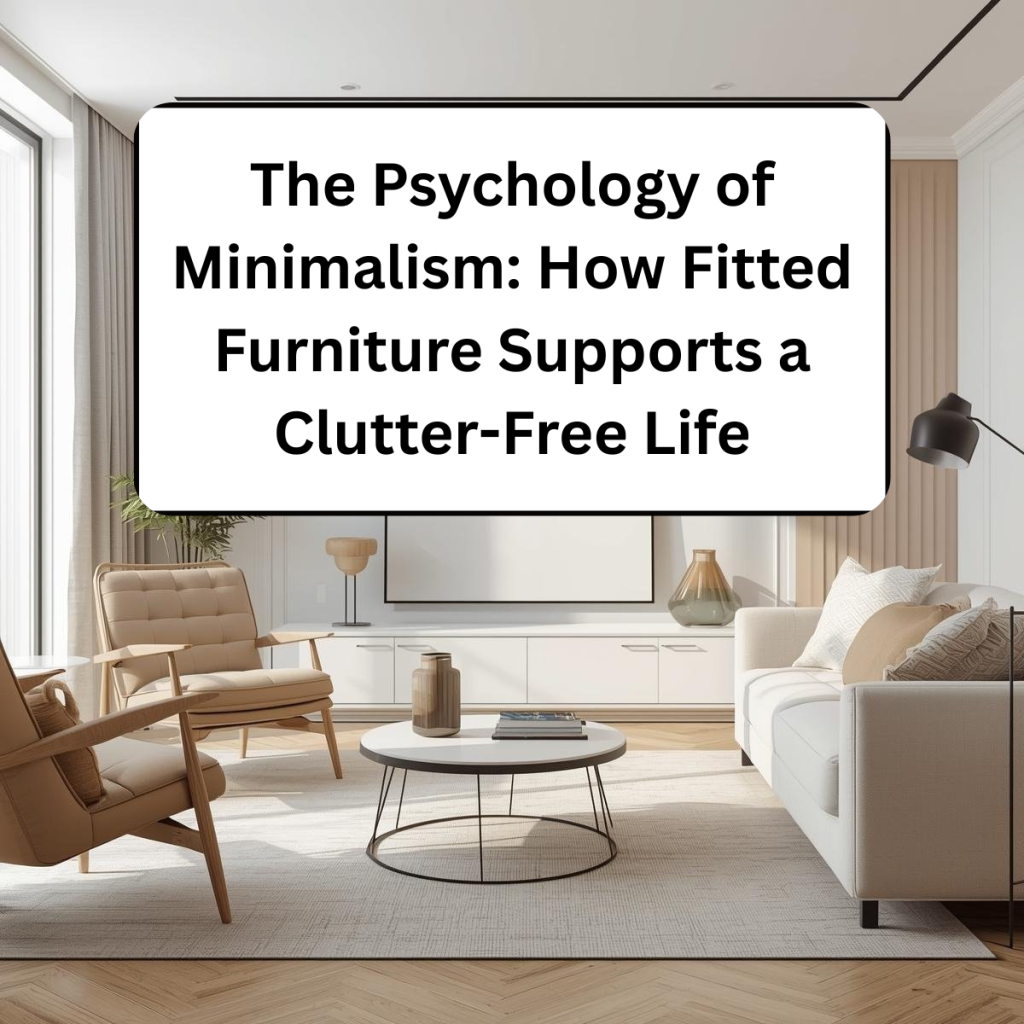
In a world filled with constant notifications, endless choices, and overwhelming schedules, the search for simplicity has become more appealing than ever. This desire for a calmer, more intentional existence has given rise to minimalism, a lifestyle that champions living with less. But minimalism is more than just an aesthetic; it’s a mindset that can profoundly impact our mental well-being. By reducing physical and visual clutter, we can make room for mental clarity and inner peace.
This article explores the psychology of minimalism: how fitted furniture supports a clutter-free life. We will delve into the principles of minimalist design, uncover the psychological benefits of a clutter-free environment, and demonstrate how custom, fitted furniture is the ultimate tool for creating serene and functional living spaces. If you’re ready to embrace simplicity and transform your home and mind, this guide is your first step on a rewarding personal journey.
What is Minimalism? An Introduction to Intentional Living
Minimalism is a lifestyle philosophy centred on living with only what you need and love. It’s a conscious move away from the belief that more possessions equal more happiness. Instead, it encourages a more intentional approach to what we own, focusing on quality over quantity and purpose over excess.
Beyond the Aesthetic
While the minimalist aesthetic—characterised by clean lines, neutral colours, and uncluttered surfaces—is well-known, the true essence of minimalism goes deeper. It’s about creating space in our lives, not just in our homes. This minimalist lifestyle aims to reduce distractions, allowing us to focus on what truly matters, whether that’s relationships, experiences, or personal growth.
The Mind-Space Connection
The state of our living spaces often reflects our mental state. A cluttered home can contribute to feelings of stress, anxiety, and being overwhelmed. Conversely, a tidy, organised space can foster a sense of calm and control. This connection is at the heart of the psychology of minimalism.
A Path to Mental Well-being
Embracing minimalism has significant psychological benefits. By simplifying our surroundings, we can reduce our cognitive load—the amount of information our brains have to process. This can lead to decreased stress, improved focus, and a greater sense of overall happiness and mental well-being.
The Psychological Benefits of a Clutter-Free Life
The link between our environment and our mental health is powerful. A clutter-free life, supported by minimalist design principles, offers a wealth of advantages for our emotional and cognitive well-being.
Reducing Stress and Anxiety
Visual clutter directly contributes to stress. Studies have shown that a disorganised home can elevate levels of the stress hormone cortisol. When our living spaces are chaotic, our minds follow suit. Eliminating clutter removes this constant, low-level stressor, creating a more peaceful and restorative home environment.
Enhancing Mental Clarity and Focus
Visual noise competes for our attention. Every object in our field of vision is a piece of data our brain has to process. By reducing these visual distractions, we free up mental resources. This leads to improved concentration, better decision-making, and enhanced mental clarity.
Combating Decision Fatigue
A minimalist lifestyle simplifies daily routines. With fewer possessions, you spend less time choosing what to wear, finding your keys, or deciding what to do next. This reduction in daily choices helps combat decision fatigue, leaving you with more energy for the decisions that truly matter.
Promoting a Sense of Control
Clutter can make us feel powerless, as if our possessions own us rather than the other way around. Taking control of your physical clutter helps reclaim that sense of agency. The act of decluttering itself can be empowering, boosting confidence and promoting emotional well-being.
How Fitted Furniture Creates a Minimalist Home
Achieving a minimalist home doesn’t mean living in an empty room. It means making smart, intentional choices about your furniture. Fitted furniture is the perfect ally in this quest, offering seamless storage solutions that champion the minimalist aesthetic.
The Power of Integrated Design
Unlike freestanding furniture, which can make a space feel cramped, fitted furniture is designed to become part of the room’s architecture. It maximises every inch of space, from floor to ceiling, creating a cohesive and uncluttered look. The clean lines and integrated nature of fitted pieces are fundamental to minimalist design.
Maximising Space with Built-In Storage
Fitted furniture excels at providing built-in storage. Custom wardrobes, media units, and shelving are designed to your exact specifications, ensuring there is a designated place for everything. This is crucial for maintaining a clutter-free environment, as it allows you to keep unnecessary items out of sight.
The Beauty of Hidden Storage
Minimalism thrives on hidden storage. Fitted furniture can incorporate clever solutions like drawers within window seats, hidden compartments in cabinets, or full-height cupboards that blend into the wall. This keeps your living spaces tidy while ensuring everything you need is easily accessible.
Creating Functional and Serene Spaces
The ultimate goal of minimalist interior design is to create spaces that are both beautiful and highly functional. A furniture specialist can help you design pieces that serve multiple purposes, reducing the need for excess furniture and supporting a minimalist approach to living. This focus on functionality helps create a balanced environment.
Principles of Minimalist Interior Design
Creating a minimalist space is an art form guided by a few key principles. These tenets help interior designers and homeowners alike craft living spaces that feel both simple and soulful.
“Less is More”
The foundational principle of minimalism is to include only what is necessary. This means choosing fewer pieces of furniture and decor, but ensuring each one is high-quality and serves a purpose. The focus is on a few meaningful pieces rather than an abundance of items.
Embracing Clean Lines
Minimalist furniture is defined by its clean lines and simple forms. Unfussy, geometric shapes create a sense of order and calm. Fitted furniture naturally adheres to this principle, with its seamless integration and sleek profiles that eliminate visual noise.
The Importance of Negative Space
In interior design, negative space—the empty space around and between objects—is just as important as the objects themselves. It gives the eye a place to rest and prevents a room from feeling crowded. A minimalist approach intentionally creates negative space to enhance the feeling of openness.
A Neutral Colour Palette
Minimalist decor often relies on a muted colour palette of soft neutrals like white, grey, and beige. These colours create a serene backdrop and enhance the feeling of space and light. Bold colours can be used sparingly as accents to add visual interest.
Texture and Natural Materials
To prevent a minimalist space from feeling cold or sterile, texture is key. The use of natural materials like wood, wool, natural stone, and linen adds warmth and depth. Soft materials and varied textures make a room feel inviting and comfortable without adding visual clutter.
Decluttering Rules for a Minimalist Lifestyle
The journey to minimalism begins with decluttering. Over the years, various methods have been developed to help people part with excess stuff. Here are a few popular rules to get you started.
What is the 50% Rule for Clutter?
This is a more extreme approach for those serious about making a big change. The 50% rule challenges you to get rid of half of your possessions. While it sounds drastic, it forces you to be ruthless in evaluating what you truly need and value, accelerating your path to embracing minimalism.
What is the 12-12-12 Rule for Decluttering?
Popularised by author Joshua Becker, the 12-12-12 rule is a simple challenge to kickstart your decluttering process. The task is to find:
- 12 items to throw away.
- 12 items to donate.
- 12 items to be returned to their proper home.
This method is less overwhelming than tackling an entire room and provides a clear, actionable goal.
What is the 10-10-10 Rule for Decluttering?
This rule is similar to the 12-12-12 method but focuses on speed. You set a timer for 10 minutes and find 10 items to throw away and 10 items to donate or put away. It’s a quick burst of activity that can make a noticeable difference in a short amount of time.
What is the 5/7 Rule in Minimalism?
The 5/7 rule, also known as the “Minimalism Game,” was created by The Minimalists. On the first day of the month, you get rid of one item. On the second day, two items, and so on. If you make it through a full 31-day month, you will have decluttered nearly 500 items. It turns decluttering into a fun, progressive challenge.
Overcoming the Obstacles to Minimalism
Embracing a minimalist lifestyle is a personal journey, and it often comes with challenges. Understanding these hurdles is the first step to overcoming them.
The Emotional Attachment to “Stuff”
Our possessions are often tied to memories, people, and aspirations. Letting go of these items can feel like letting go of a part of ourselves. The key is to acknowledge the feeling, take a photo of the item if needed, and remember that the memory lives within you, not the object.
The Fear of “What If I Need It Later?”
This is a common roadblock. We hold onto unnecessary items “just in case.” A good rule of thumb is the 20/20 rule: if you can replace the item for less than £20 in under 20 minutes, it’s safe to let it go. This helps put the risk into perspective.
Dealing with Shared Spaces
Implementing minimalism can be tricky when you live with others who don’t share your vision. Communication is essential. Start with your personal space and lead by example. For shared spaces, focus on creating functional zones and a built-in support system for organisation that benefits everyone.
The Pressure of Mindful Consumption
Once you’ve decluttered, the next challenge is to prevent more clutter from coming in. This requires a shift towards mindful consumption. Before making a purchase, ask yourself if you truly need it and if it will add value to your life. This habit is crucial for maintaining a clutter-free environment long-term.
Key Takeaways for Your Minimalist Journey
- Start Small: Don’t try to declutter your entire house in one weekend. Begin with a single drawer or a small room to build momentum.
- Focus on the Why: Constantly remind yourself of the psychological benefits you’re aiming for—less stress, more mental clarity, and improved well-being.
- Invest in Smart Storage: Fitted furniture with built-in storage is your best tool for keeping your minimalist home organised and serene.
- Prioritise Quality: Adopt a “fewer but better” mindset. Choose high-quality, meaningful pieces that you will love for years to come.
- Be Patient: Transforming your life and home is a process. Be kind to yourself and celebrate small victories along the way.
Conclusion: A More Intentional and Fulfilling Life
The psychology of minimalism reveals a powerful truth: by simplifying our external world, we can cultivate a more peaceful internal world. It offers a path away from the chaos of consumerism towards a more intentional and fulfilling life. Creating a clutter-free environment is not just about aesthetics; it’s a profound act of self-care that supports your mental health and overall happiness.
Fitted furniture provides the ultimate built-in support system for this journey. Its ability to create seamless, functional, and uncluttered living spaces makes it an indispensable asset for any minimalist home. By combining the principles of minimalist design with the practicality of bespoke storage, you can create spaces that not only look beautiful but also actively contribute to your mental well-being.
If you are ready to explore how fitted furniture can support your vision of a clutter-free life, our team is here to help. We can work with you to design intentional, beautiful spaces that bring a sense of calm to your daily life. contact us now.